Seismic engineering in Medicine Hat encompasses the comprehensive assessment, analysis, and design strategies required to protect structures and infrastructure from earthquake-induced forces. While southern Alberta is often perceived as a region of low to moderate seismicity, the city's position within the Western Canada Sedimentary Basin and its proximity to tectonic boundaries in British Columbia and the Montana Seismic Belt necessitate a rigorous approach to seismic hazard mitigation. This category addresses everything from ground response characterization to advanced structural protective systems, ensuring that new developments and existing buildings can withstand potential seismic events without catastrophic failure.
The local geological context plays a critical role in shaping seismic risk in Medicine Hat. The city is underlain by thick sequences of glacial till, alluvial sands, and silts of the South Saskatchewan River valley, overlying Cretaceous bedrock shales and sandstones of the Belly River and Bearpaw formations. These unconsolidated near-surface deposits, particularly in areas adjacent to the river, can amplify ground motions and are susceptible to strength loss during cyclic loading. Our specialized soil liquefaction analysis activities directly target these vulnerable silty sand layers, evaluating the potential for sudden loss of bearing capacity that could undermine foundations, buried utilities, and bridge abutments.
Canadian seismic design is governed by the National Building Code of Canada, with specific reference to the seismic hazard values provided in the Geological Survey of Canada's seismic hazard model. For Medicine Hat, engineers must adhere to the requirements of Part 4 of the NBC, which delineates seismic force-resisting system parameters, site classification procedures based on shear wave velocity measurements, and dynamic analysis requirements for irregular structures. The code mandates a site-specific response spectrum be developed for critical facilities and tall buildings, considering the local soil amplification effects. This regulatory framework ensures that all structural designs account for the appropriate uniform hazard spectra and probability levels, typically the 2% in 50-year exceedance probability for ultimate limit state design.
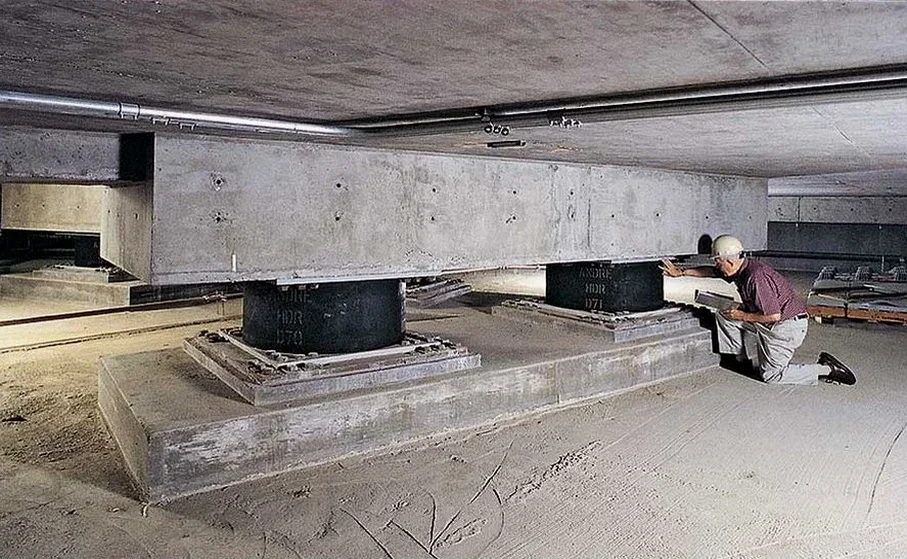
A wide range of project types in Medicine Hat requires dedicated seismic analysis. Essential facilities such as the Medicine Hat Regional Hospital, emergency response centers, and schools fall into high-importance categories with more stringent performance criteria. Industrial infrastructure, including the extensive natural gas processing and petrochemical plants that define the region's economy, demands resilience against seismic events to prevent environmental releases and operational downtime. Bridge structures spanning the South Saskatchewan River and the Trans-Canada Highway overpasses must incorporate ductile detailing and, in some cases, base isolation seismic design to achieve the required performance objectives. Even conventional commercial and residential developments on soft soil sites benefit from seismic microzonation studies that inform optimized foundation design and grading strategies.
Common questions
Is Medicine Hat in an active seismic zone, and why does seismic design matter here?
Medicine Hat is classified as a region of low to moderate seismic hazard, but it is not immune to earthquake effects. Distant large-magnitude events from western British Columbia or the Montana Seismic Belt can generate long-period ground motions that travel efficiently through the Western Canada Sedimentary Basin. Local soil conditions, particularly soft alluvial deposits, can amplify these motions significantly, making seismic design crucial for structural safety and code compliance.
What are the key soil conditions in Medicine Hat that affect seismic site response?
The key conditions include thick deposits of glacial till, loose to compact alluvial sands, and silts within the South Saskatchewan River valley. These soils can amplify seismic waves and are prone to phenomena like cyclic softening or liquefaction. Site class determinations, typically ranging from C to E based on shear wave velocity profiles, directly influence the design ground motions specified by the National Building Code of Canada.
Which Canadian building code provisions apply to seismic design for structures in Medicine Hat?
Seismic design in Medicine Hat must follow Part 4 of the National Building Code of Canada (NBC), which references the Geological Survey of Canada's seismic hazard values. The code requires site-specific classification using shear wave velocity or standard penetration test data, and for certain irregular structures or high-importance buildings, a dynamic modal response spectrum analysis. Alberta also adopts the NBC without significant provincial amendments for structural seismic provisions.
What types of projects in Medicine Hat typically require a comprehensive seismic hazard analysis?
Post-disaster buildings like hospitals and emergency activities, high-importance industrial facilities such as gas plants, major bridge structures, and tall or irregularly shaped buildings all require detailed seismic analysis. Additionally, any structure on a Site Class D or E soil, or projects involving deep excavations adjacent to the river, will necessitate a site-specific study to refine the design ground motions and assess geotechnical seismic hazards like liquefaction.