Medicine Hat sits on the South Saskatchewan River valley, where the bluffs expose layers of Bearpaw shale, glacial till, and alluvial sands. This mix means bearing capacity can swing 50% within a single lot. A standard footing pad won't work everywhere. We run shallow foundation design for Medicine Hat projects starting from the real soil profile, not a textbook assumption. We pull samples from the target depth, measure undrained shear strength on silty clays, and check dilation in the sandy lenses. The river terraces look flat but often hide loose deposits that compact unevenly under load. Our lab produces a site-specific shallow foundation design that respects the valley's geology and the frost depth requirements in Alberta's climate.
A 50% bearing capacity swing across one Medicine Hat lot is common. We design to the weakest lens, not the average.
Our approach and scope
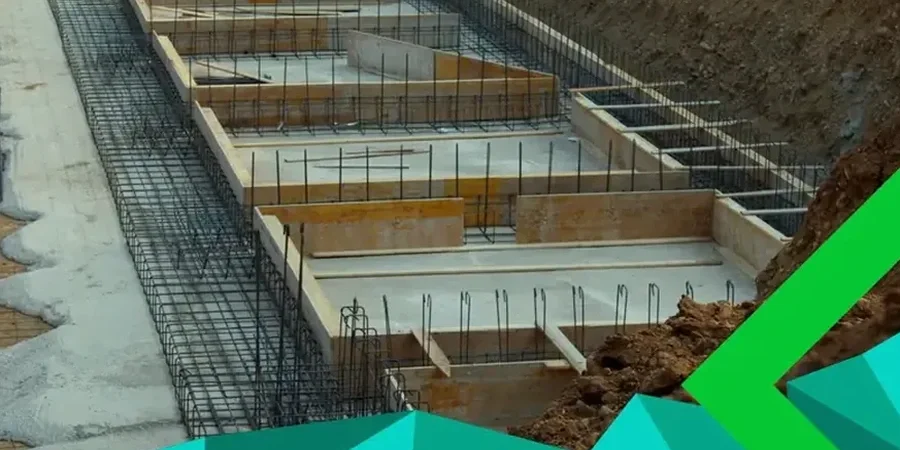
Site-specific factors
In Medicine Hat we often see builders treat the whole south slope as uniform till. It's not. The contact between the glacial drift and the Bearpaw shale acts like a groundwater trap. When you excavate in spring, that interface can bleed water for weeks. If you pour a footing on softened shale, you'll get settlement before the frame is up. We flag these contacts during sampling. Another local pattern: old backfill from gas well construction buried under residential lots. It looks like natural ground but compacts poorly. A shallow foundation design that skips test pits can miss this entirely. We recommend at least one pit per 500 m² in redeveloped areas. The extra hour of site work saves a future underpinning job.
Reference standards
NBCC 2020 Part 4, CSA A23.3:19, ASTM D2487 (Unified Soil Classification)
Complementary services
Site investigation and sampling
Solid stem auger drilling or test pits to recover undisturbed samples from the bearing stratum. We log the stratigraphy at 0.5 m intervals and measure groundwater.
Geotechnical lab testing
Atterberg limits, grain size, Proctor compaction, unconfined compression on clay, and direct shear on sand. All tests run in our Medicine Hat lab under the same roof as the engineering team.
Foundation engineering report
Stamped calculations for bearing capacity, settlement (immediate and consolidation), frost heave protection, and slab-on-grade design. Includes a construction QA/QC checklist for the site super.
Typical parameters
Common questions
What does a shallow foundation design package include for a Medicine Hat lot?
You get a stamped report with allowable bearing pressure, anticipated total and differential settlement, frost protection depth (minimum 1.2 m in Medicine Hat), and a footing width table. We include soil logs, lab test results, and a construction specification for the subgrade prep. If we hit soft lenses, we add a mud-jacking or over-excavation note.
How much does shallow foundation design cost in Medicine Hat?
A typical package runs between CA$2,900 and CA$4,230. The range depends on the number of boreholes, lab tests required (Atterbergs, Proctor, consolidation), and whether we need to model a raft versus isolated footings.
How long does the design process take from drilling to final report?
Count on 10 to 14 business days. Drilling and sampling take one day on site. Lab work runs 5 to 7 days for classification and shear strength. The engineering analysis and report drafting take another 3 to 5 days. We can compress this for tight schedules.
What's the biggest foundation risk in the South Saskatchewan River valley?
Uneven settlement from soft alluvial pockets and shrink-swell on the clay slopes. We see differential movement of 20 to 40 mm when footings are placed on untreated fill or when the bearing stratum varies under a single building footprint. A proper shallow foundation design catches this before excavation starts.
Do you design slab-on-grade for steel buildings and warehouses in Medicine Hat?
Yes. We design ground-supported slabs with thickened edges, accounting for column loads up to 200 kN. We specify the subbase thickness, vapor barrier, and reinforcement mesh. For heavy forklift traffic we run a point-load punching shear check and advise on joint spacing. More info.