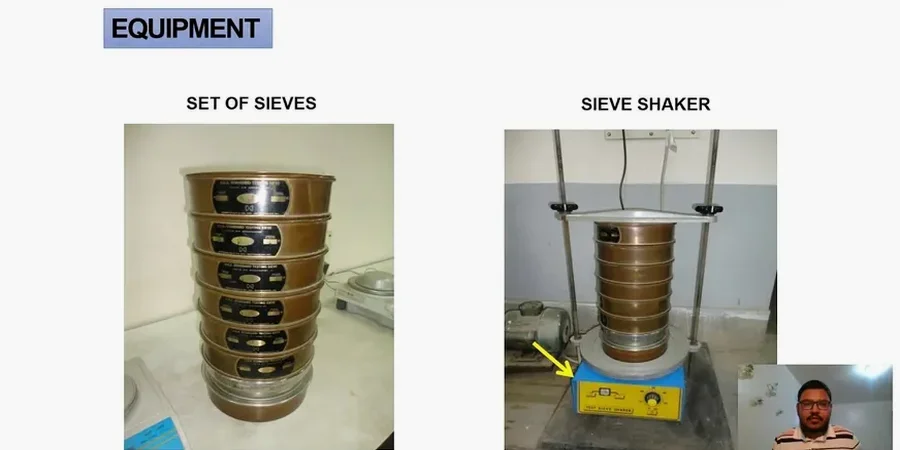
The difference between a project on the silty clays near the Flats and one on the sandy gravels up on the Southeast Hill comes down to one thing: particle size. In Medicine Hat, the South Saskatchewan River carved through multiple glacial till layers, leaving a mix of fine lacustrine deposits and coarse outwash. A standard sieve stack alone misses the silt and clay fraction that controls drainage and frost heave. That is why our laboratory runs the full combined grain size analysis—mechanical sieving for the coarse fraction and hydrometer sedimentation for fines passing the No. 200 sieve. A test pit program near the riverbank often reveals interbedded lenses that shift from sand to clay in less than a meter. Without the hydrometer stage, you are guessing on that clay percentage. We pair this data with Atterberg limits to nail down the soil classification precisely, which matters when the local till can plot as either CL or ML depending on just a few percent of fines.
A soil's behavior is written in its grain size curve—miss the hydrometer, and you miss the chapter on frost susceptibility and drainage.
Our approach and scope
Site-specific factors
The Bearpaw Formation shale bedrock under Medicine Hat is overlain by glacial till with a fines content that can swing from 15% to 60% within a single borehole. Relying on a sieve-only analysis in these conditions produces a misleading gravel-sand-silt split. A contractor who skips the hydrometer on a footing excavation in the Norwood area might classify a frost-susceptible silt as clean sand, then face differential heave after the first winter. The same risk applies to drainage design: a soil with 12% clay versus 8% clay has a permeability difference of an order of magnitude. We have seen gradation reports from other labs that report "non-plastic fines" without a hydrometer curve—that is a red flag. The combined analysis also feeds directly into liquefaction screening. The Seed & Idriss criteria use D50 and fines content, and getting either of those wrong by assuming a sieve-only gradation can flip a project from "no risk" to "further investigation required."
Reference standards
ASTM D422, ASTM D7928, ASTM D2487 (USCS classification), ASTM D1140 (wash method), CSA A23.1 (concrete aggregate gradation)
Complementary services
Atterberg Limits
Liquid limit and plastic limit on the minus No. 40 fraction. Combined with the hydrometer curve, this gives the full USCS classification per ASTM D2487.
Sand Cone Density
Field density by sand cone method. We correlate in-place dry density with the lab maximum from a Proctor curve built on the same gradation data.
In-Situ Permeability Testing
Falling head or constant head borehole permeability tests. The gradation curve provides the Hazen D10 estimate we cross-check against field data.
Triaxial Testing
CU and CD triaxial tests where specimen gradation targets—particle size distribution, fines content—are verified on the companion sieve and hydrometer report before shearing.
Typical parameters
Common questions
What does a combined sieve and hydrometer grain size analysis cost in Medicine Hat?
A full combined test—sieve stack plus hydrometer sedimentation—typically runs between CA$140 and CA$220 depending on the sample's gradation complexity and whether a wash loss determination is required. Samples with high gravel content needing larger initial masses and extra sieve sets fall at the upper end.
When is the hydrometer portion required instead of just a sieve analysis?
Any time more than 5% of the material passes the No. 200 sieve. In Medicine Hat's glacial till, that is almost always the case. The hydrometer quantifies the silt versus clay split, which controls frost susceptibility classification, drainage design, and whether the fines are truly cohesive or just rock flour.
How long does the hydrometer sedimentation phase take to complete?
The full sedimentation run requires a minimum of 24 hours to capture the 1440-minute reading that defines the clay fraction boundary at approximately 2 µm. We report preliminary sieve data same-day if needed, but the complete combined gradation curve with hydrometer tail ships the next business day.