The first sign of trouble on a Medicine Hat project often appears during excavation. You hit a lens of saturated clay at two metres, right where the footing was supposed to sit. We saw this on a commercial build along Dunmore Road last spring—the original pad footing design had to be scrapped entirely. A raft foundation became the only practical path forward. Our team works with these soil transitions daily, from the stiff glacial till near the river bluffs to the softer lacustrine deposits south of the highway. Before committing to a mat foundation design, we always review the stratigraphy from a CPT test to confirm the depth to competent bearing strata and rule out compressible layers that could cause differential settlement down the line.
A well-designed raft foundation distributes load so evenly that even Medicine Hat's notoriously variable clay can support it without excessive differential settlement.
Our approach and scope
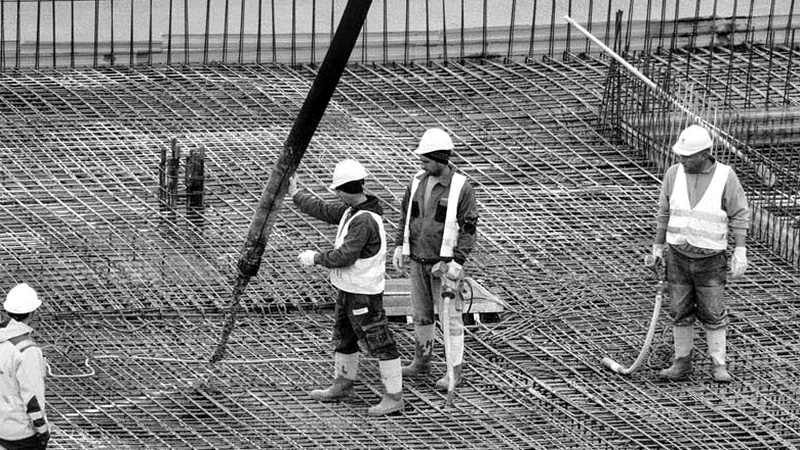
Site-specific factors
The contrast between two Medicine Hat neighbourhoods tells the whole story. In Crescent Heights, perched on the north valley slope, stiff glacial till often provides excellent bearing, and a mat foundation can be relatively straightforward. But move down to Riverside or the Flats, and you are dealing with alluvial deposits that are far more compressible—and far less predictable. Construction on these softer soils without a thorough settlement analysis is a gamble we refuse to take. The biggest risk we encounter is differential movement where a raft spans two distinct soil units, a situation that demands careful joint detailing and sometimes a transition to a piled raft system. Seasonal moisture fluctuations in the expansive clay near the surface add another layer of complexity, which is why we always specify underslab drainage and, in some cases, a moisture barrier to stabilize the foundation subgrade.
Watch the video
Reference standards
NBCC 2020 – National Building Code of Canada, CSA A23.3:19 – Design of Concrete Structures, ASTM D1195 / D1196 – Plate Load Test Procedures, CFEM 2006 – Canadian Foundation Engineering Manual
Complementary services
Geotechnical Investigation & Soil Characterization
We drill, sample, and test the subsurface to determine bearing capacity, settlement potential, and lateral variability across the foundation footprint.
Structural Design of Raft Foundations
Reinforced concrete mat design per CSA A23.3, with finite element modeling for complex column layouts and irregular slab geometries.
Construction Phase Review & QA/QC
We verify subgrade preparation, reinforcement placement, and concrete placement to ensure the as-built foundation matches the design intent.
Typical parameters
Common questions
When is a raft foundation preferable to strip footings in Medicine Hat?
A raft becomes the better option when the allowable bearing pressure is under 100 kPa or when you need to span across pockets of weaker soil. In the valley areas of Medicine Hat, where alluvial clays can vary significantly over short distances, a mat foundation distributes column loads across the entire footprint and reduces the risk of differential settlement that isolated footings would knowledge.
What does raft foundation design cost in the Medicine Hat area?
For a typical residential or light commercial mat foundation design, including geotechnical investigation, structural analysis, and stamped drawings, the cost ranges from CA$1,340 to CA$5,190 depending on project size, soil complexity, and whether finite element modeling is required.
How deep must a raft foundation be placed for frost protection here?
The NBCC requires a minimum 1.5-metre frost protection depth in the Medicine Hat region. We typically specify underslab rigid insulation extending horizontally beyond the foundation perimeter, which can reduce the required depth slightly while still meeting code requirements and preventing frost heave in the expansive near-surface clays.
Do you handle piled raft designs for poor soil conditions?
Yes. When the upper soil profile is too weak to support a conventional raft—something we see in the river valley deposits—we design piled raft systems that transfer load through friction piles or end-bearing piles to deeper competent strata. The raft then acts as a structural platform connecting the pile heads.