The stark, semi-arid climate of Medicine Hat, where the South Saskatchewan River carves through deep glacial till, creates a deceptive moisture regime. Soils that appear dry and stable on the surface often undergo significant volume changes when exposed to water, a critical consideration given the city's average annual precipitation of just over 330 mm. Our laboratory team regularly sees how these specific conditions affect local clays, making the Atterberg limits test an essential step before any foundation design. Understanding the liquid limit, plastic limit, and plasticity index of the Bearpaw Formation or overlying till directly informs how a structure will behave through freeze-thaw cycles and rare but intense rainfall events. For comprehensive site characterization, we often combine this analysis with a grain size distribution to fully define the fine-grained fraction of the material.
A plasticity index above 30 in the Medicine Hat till almost always demands a geotechnical solution that accounts for significant seasonal volume change.
Our approach and scope
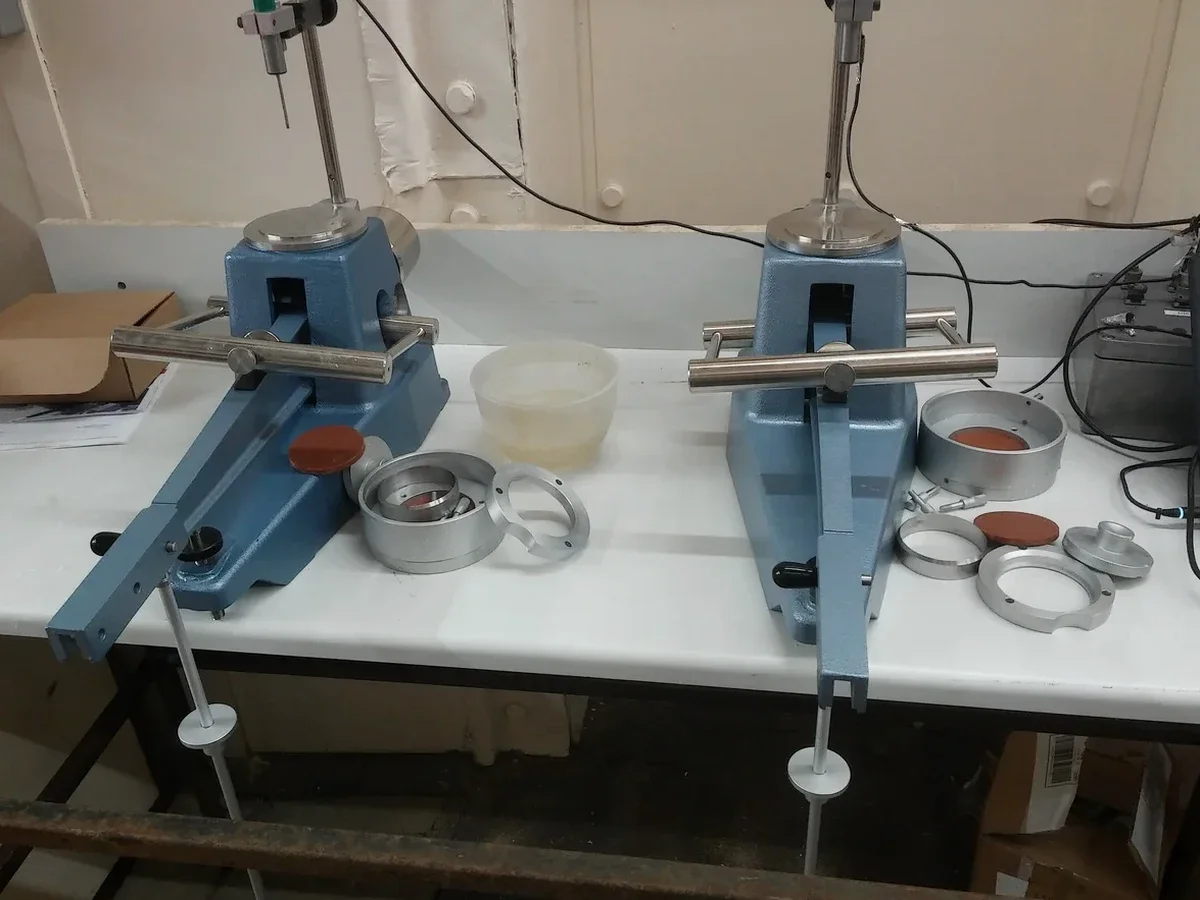
Site-specific factors
With a population surpassing 63,000 and extensive development on the post-glacial landscapes flanking the Seven Persons Creek and Ross Creek, ignoring soil plasticity is a direct path to structural distress. The primary risk in this region is not catastrophic bearing failure but the costly, slow-moving damage caused by expansive clays. These soils can exert swelling pressures sufficient to crack basement walls, lift sidewalks, and distort slab-on-grade floors, especially during the transition from a dry autumn to a wet spring. A low liquid limit might suggest a stable material, but if the soil's natural moisture content is close to that limit, even minor landscape irrigation can trigger unacceptable heave. Our testing provides the hard numbers needed to decide between a standard footing and a more resilient, engineered system.
Reference standards
ASTM D4318 – Standard Test Methods for Liquid Limit, Plastic Limit, and Plasticity Index of Soils, ASTM D2487 – Standard Practice for Classification of Soils for Engineering Purposes (Unified Soil Classification System), NBCC 2020 – National Building Code of Canada
Complementary services
Comprehensive Atterberg Limits Package
Includes liquid limit, plastic limit, and plasticity index determination on disturbed samples. We offer a unified soil classification and a detailed commentary on the expected engineering behavior based on the measured plasticity.
Soil Suitability and Pre-Design Screening
A cost-effective screening for proposed building sites, combining Atterberg limits with natural moisture content and a visual-manual classification to quickly identify potentially expansive soils before major investment in deep exploration.
Typical parameters
Common questions
What is the typical cost for Atterberg limits testing in Medicine Hat?
The standard rate for a combined liquid limit and plastic limit determination on a single sample typically falls between CA$100 and CA$150. The final price depends on the number of samples and whether expedited turnaround is required.
How long does it take to get results from an Atterberg limits test?
We understand that project timelines in Medicine Hat are often tight, particularly during the short construction season. Standard testing is completed within two business days of sample receipt, and we can arrange same-day reporting for urgent trial pit samples.
Why is the plastic limit so important for soils in the Medicine Hat area?
The plastic limit defines the moisture content below which the soil behaves as a brittle solid. In Medicine Hat, where surface clays can desiccate in summer, knowing this value helps predict the shrinkage potential and the risk of cracking in earthworks and shallow foundations.
Can you test samples that contain a lot of silt along with the clay?
Yes. The glacial till common to the South Saskatchewan River valley is often a silty clay mixture. We follow the ASTM D4318 standard rigorously, including the wet preparation method, to ensure the silt fraction does not skew the liquid limit results.
How do I collect a sample for Atterberg limits testing in Medicine Hat?
You need a disturbed sample, which means the soil structure does not need to be preserved. Use a sealed plastic bag or a glass jar. We recommend collecting at least 500 grams of material from the zone of interest to ensure there is enough fine fraction for a representative test.